Wednesday, June 15, 2011

Crime Is Beautiful?

David Bowie, arrested in Rochester, N.Y. in 1976.

Or, the mug shot as work of art, kind of astonishingly gorgeous composition and content.

More mug shots of musicians here.

Sunday, June 12, 2011

Midnight in Paris, After Berlyn in Brooklyn


Last night at dinner at Berlyn (presumably spelled with a “y” to establish solidarity with Brooklyn?), across the street from BAM, the older couple seated next to us trapped their and our server for an awkward couple of minutes, going on about Woody Allen's Midnight in Paris, which they'd just seen.

“It was wonderful,” the wife said. “If you've been to Paris, it reminds you of why you love it so much. And if you've never been there, it reminds you why you need to go.”

If she had said something less ridiculous, we may have leaned over and told her what a coincidence! we are seeing the 9:30 screening! As it was, S. Jam Fitzgerald and I shared a laugh at her via eye contact and dug into our food.

Our silent mocking proved well-grounded. The movie isn't a love letter to Paris at all. Visually maybe, in that it makes Paris look super-Parisian – the opening montage is the one from Manhattan reassigned to the city of lights. But what Allen is really trying to do is mock Americans who idealize Paris, who pretentiously offer monologues on Monet's water lilies, who take every opportunity to display their proficiency in the French language, and who can't imagine anything better than that city in the 1920s. If you are one of these people, you might have exactly the reaction to the movie that our neighbor at dinner displayed.


Even more than mocking stateside francophiles, though, Allen is mocking the human tendency to idealize and romanticize times gone by, to succumb to the lure of nostalgia. Wilson's character, Gil, is a disaffected but successful screenwriter in Los Angeles who is trying to transition to novel-writing, and gets it into his head during a trip to Paris with his fiance's family that if he just lived in an attic in Paris, he could pull it off, duh. Gil is in a high state of mistaking nostalgia for inspiration, a blunder we are all in danger of making all the time.


His fiance, Inez (played by Rachel McAdams), dismisses his fantasy for what it is, which is confusing to the viewer, because she is so materialistic and needlessly unsupportive and yet she's the one expressing our own voices of reason.

One night after dinner, Inez goes off dancing with her insufferable friends and Gil walks home by himself, gets lost, sits on some steps, hears some church bells ring to mark Midnight, watches F. Scott and Zelda roll up in an antique car, and let's them whisk him to a party. He's now in 1920s Paris. I don't think it's supposed to be lost on the viewer that while Gil declined to go dancing in the present, he found the same activity exhilarating in the context of his beloved old era.

Over subsequent days, Gil is drunk on the idea of artistic Paris, and becomes especially fond of Cole Porter tunes and getting his fiance to walk in the rain with him – that's when Paris is at its most romantic, didn't you know. Every night, he returns to the 1920s, where he meets all the other people you'd expect: Hemingway, Salvador Dali, Picasso, Gertrude Stein, Bunuel, and so on.


It's an agreeable enough way to pass an hour and a half. Owen Wilson makes a fine stand-in for Woody Allen; Marion Cotillard is a revelation, the various actors make great fun of bringing those dead artists and writers back to life, and the flapper dresses are a subplot unto themselves. Everyone in the movie is pretty great, in fact, except poor Rachel McAdams, who got relegated to the present, in an uncharacteristically vapid role (and what was up with all her belts?!).

Nothing of much weight ever happens, but you get charmed and delighted. Like listening to Girl Talk, or grabbing drinks with Kirsten Dunst.

It was raining when we got out of the theater. I struggled to open my $4 umbrella, and S. Jam Fitzgerald said, “You don't need an umbrella. Brooklyn is at it's most beautiful at night, in the rain. Let's walk.”

Ha. (He didn't mean it, and I didn't listen, just fyi.)

But the lady at dinner probably actually did that.

Friday, June 10, 2011

I Went to the Dentist in the Spire of the Chrysler Building

When I scheduled it, it meant nothing to me that the appointment I booked for yesterday with a new dentist had an address of 405 Lexington Ave. I knew it was near Grand Central, but it wasn't until I got there, vaguely dreading the next hour of gag-inducing X-rays and disapproving questions about my daily dental routine, that I discovered it was located in the Chrysler Building.

It's always been my favorite skyscraper, from the time that Miss Hannigan told Annie to make the floors shine like it, at which time my four-year-old self had no concept of what the thing looked like but loved the line anyway. (My love of Annie was taken to such extremes that I was known to dress like an orphan, find a pail, and command my mother to recite the Chrysler Building line to me as I scrubbed the kitchen floor.) When I moved to New York City I had long forgotten Orphan Annie, but now found its tidy, shimmering symmetry captivating, and everything that a skyscraper should be.

At the building's front desk, I was directed to head for the 69th floor, just two shy of the top, at which point I began to feel the nascent tinglings of an adventure setting in. Getting to floor 69 required taking one elevator to the 57th floor, then exiting into the bank, navigating a couple of hallways, and entering another elevator, this one a rickety slothful thing that was nonetheless an object of enduring art deco glamor:


Patiently, I waited as the ancient piece of machinery (the very thing that made skyscrapers possible in the first place!) took me up into the core of the spire, which from the outside, looks like this:


As much as I always admired the building, I'd never been afforded an occasion to enter the place, and never could have imagined that something so routine and distasteful as a dentist appointment would be the thing to deposit me all the way up in the top, where one looks out those triangular windows from the office's reception area:

And from the dentist's chair, instead of staring at posters of kittens accompanied by simplistic aphorisms meant to inspire the living of a good life so nauseating they make you want to stab yourself with one of those pointy dental instruments, you stare at this:


Even the discovery of a cavity could not dampen the experience, and in fact gave me reason to look forward to an imminent next visit.

Tuesday, June 7, 2011

It's Time for Everyone to Understand that Flip Flops Suck Donkeys


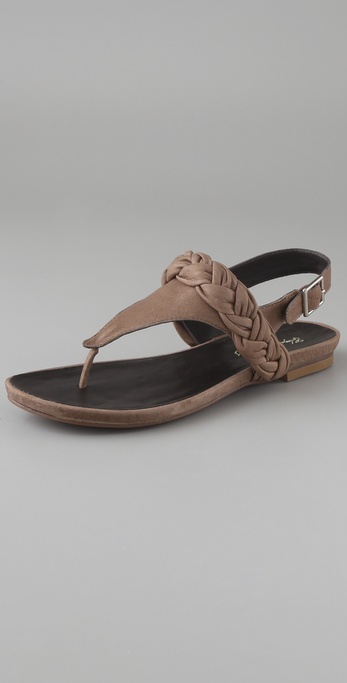
Every year for the past decade, the arrival of spring prompts shoe stores throughout the country to showcase an increasing number of variations on the thong flip flop. No longer content to market the traditional version, made of rubber or plastic, with a flat sole, and meant for the kind of casual athleticism that most often exists alongside large bodies of water, these evolved thong flip flops take the form of elaborate strappy sandals or platform high heels – no type of summer shoe is any longer immune. Like bugs lured to a buzzing lamp, women follow an unseen force that leads them to place on their feet something that is neither comfortable nor attractive. Also, that is likely to permanently damage their ankles and feet.

I did a spot survey on the Q train platform this morning, and can safely estimate that at least 80 percent of women chose to wear some form of thong flip flop today, defying both good sense and good taste.

They also defy the typical logic of shoe-wearing for women, which normally goes something like this: These shoes hurt, but they are gorgeous. Therefore, I will wear them (The Carrie Bradshaw logic). Or: These shoes are so comfortable, it doesn't matter that they aren't gorgeous. Therefore, I will wear them (The I'm a Mom logic). Or: These flats are both flattering and comfortable, and I am already tall enough. Therefore, I will wear them (The Brooklyn Girl logic).

Thong flip flops, however, follow no discernible logic: These shoes are ugly and uncomfortable and they are bad for my body. Therefore, I will wear them.


Most people, when confronted with the notion that thong flip flops are inherently uncomfortable, acknowledge they took some getting used to. “You just have to get accustomed to them, then they're fine,” explains S Jam Fitzgerald.* A friend proffers, “Every spring for the first couple of days, they bug me, but then I'm good for the summer.” They are speaking primarily of the “toe plug,” of course, that insane stretch of material that nestles between two of the toes and keeps the foot from leaving the enterprise behind altogether. There's nothing that feels natural about the toe plug – it's a toe plug! Still, people break themselves into them. But why? You can get accustomed to sweatshop labor or life without air conditioning, too, but that doesn't mean you want to pay $89.99 for the honor at Nine West.

But okay, if you are on the beach and want to wade into the surf, I get it. The old-school flips flops won't fall off, they won't be ruined by the water or the salt. They work. I'm not saying they work better than my summer go-to shoe of choice, the black Teva Kena, which seems to have possibly been tragically discontinued, but okay. And I'm not ignoring the fact that scientists have found that flips flops probably actually alter the way we walk in really bad ways , but okay.


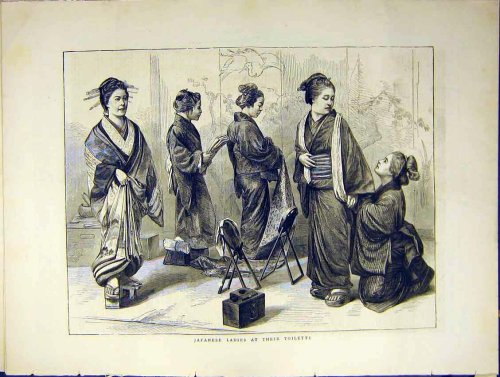
We can thank World War II for providing the cultural cross-pollination that brought the flip flop to the United States. The Japanese have been wearing their version of the thong flip flop, the zori, for centuries. For them, however, it was always a formal shoe, when worn by women accompanied always by a movement-stultifying kimono, something akin to a floor-length mermaid dress and five-inch heels at the Oscars – the kind of outfit that rich people wear to show how unnecessary it is for them to move in ways which might earn a paycheck. The Japanese had that skill perfected long before we did.


When western allied troops made their way to Japan, they discovered the zori and upon their return to America, brought some with them home as souvenirs, thus providing the seed of the flip flop. By the 1950s, the appropriated American version had caught on in the beach-bum cultures of Hawaii and California. Over the next several decades, the flip flop blanketed the United States, but retained its original composition: cheap, immune to water, sidekick to the bathing suit. In the 1990s, their popularity soared to new heights as the dot-com boom inspired millions of would-be suits to mix corporate ambition and practiced informality for the first time.

Around the turn of the millennium, shoe designers began to exploit the popularity of the world's most casual shoe. Leather replaced rubber, sparkly and/or metal embellishments appeared. Pretty soon, traditional strappy sandals had been co-opted by the thong flip flop, and a calamitous new hybrid was born – summer sandals featuring a toe plug, seemingly as an aesthetic choice. That aesthetic was, to put it kindly, awkward:


They almost invariably featured strange designs in which all lines led to that arbitrary point between the big toe and its neighbor. Except sometimes, when a perfectly normal sandal was accented by a single loop around the big toe; the toe plug as toe ring:

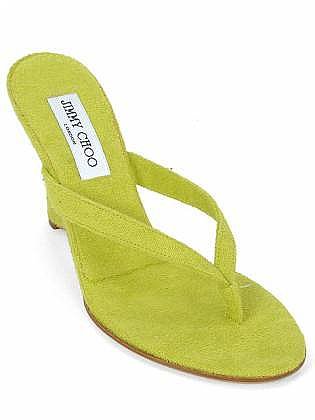
These developments were bad, but it was about to get worse. Like when Alice drank that magic potion and shot skyward in height, heels grew out of thong sandals and pushed them ever upward. And now, today, you can spend $400 on this pair of Jimmy Choos that brings honest-to-goodness tears of disillusionment to my eyes.

Thong flip flops are now the opposite of what they once were: cheap and easy. They're now onerous and fussy. I enter a shoe store and immediately dismiss 80 percent of the summer shoes on offer. The toe plug has infested the selection.

Thanks a lot, Japan. Thanks, allied troops. Thanks, surfers and shoe designers. Thanks, all you millions of people who should know better. Thanks a bunch. Flop.

* Name has been changed to protect the identity of my boyfriend.

Thursday, June 2, 2011

The Recluse I Might Have Been


Remember the first time you learned about Emily Dickinson, the time you were eight or nine and some teacher or other set a xeroxed copy of a couple of her poems on your desk. You don't remember the poems exactly, but you do exactly remember being presented with Dickinson's lifestyle of voluntary solitude. You remember the fascination with the reality that one can cloister oneself away from the typical structure of a life lived in society, and utilize a books-and-nature structure instead, if one so chooses. You remember the thrill of that possibility.


So 25 years later, when you stumble upon the Dickinson family's “homestead” in Amherst, Mass., you realize that it's probably the one writer's house you want to see more than any other, because this is where the recluse bloomed.


Or maybe you don't, but I do. Emily Dickinson was the hermit I might have been, had I been brave enough or lacking enough in normative obligations to myself, or less fond of drunken conversations with smart people in bars and English accents and big city bustle and home runs in the bottom of the ninth and fondue parties.

Although, don't think I won't still spend three days in my apartment without speaking to a soul, because I can and will and do.

Friday, May 27, 2011

Better to be a Male Writer, Cats Edition

Thanks to the blog Writers and Kitties, we can now simultaneously view the most popular (G-rated) thing on the Internet alongside one of the least popular, the long-form writer:


If I were Werner Aspenstrom (above Swedish poet and essayist), or better, if I were me, but in possession of the stately cat in this photo, a re-creation of this photo featuring me, and a book deal, I know exactly what my author photo would look like. Except probably not, because I am a female and a woman with a cat is a cliche of plucky pitiable loneliness, while a man with a cat is awesome, the cat having singularly penetrated his manly inability to feel warmth.

To wit, no one is more endearing than Herman Hesse and his cat:


No one more badass than Bukowski and his:


And no one more just a lady with a cat than Lydia Davis and hers:


So, never mind; Werner, I guess you can keep your awesome manly-heart photo.

Friday, May 20, 2011

A Fish Called Sushi

This fish, in what he can only hope is not a cruel joke at the hands of Destiny, is named Sushi. In this photo, we have Sushi offering up to his owner, Erum, who just hours later will depart for a summer in Berlin, his best puppy-dog face. I think it kind of works for him.

Still, he watched sadly and helplessly as she walked out the door at 6:30 a.m. en route to JFK, and grasped for the first time what it is to feel happy and sad at the same time.

Sushi would shed a tear, if saltwater weren't so violently lethal to him, a mere goldfish that isn't even gold. Sushi will persevere, left behind in his tank, pacing or circling until fall arrives and returns Erum to him. Or you know, since he's a goldfish, maybe he won't.

Wednesday, May 18, 2011

Epitaph of a Small Winner, The Best Book You've Never Heard Of

That weasel Woody Allen – the piddlingest man ever to become a lady-killer – included Epitaph of a Small Winner on his list of five favorite all time books over at The Daily Beast, and I once again find myself applauding his artistic sensibilities in spite of his diminutive, incestuous, over-the-top Jewish neurotic tendencies (which explains the lady-killing, really). Epitaph of a Small Winner should be on more top five lists. It's on mine. And Susan Sontag wrote an ecstatic introduction to the English translation, so now you don't even have to take my and Woody's word for it.

Written by the 19th century Brazilian author Machado de Assis, the novel pops up from time to time in the general literary consciousness, enough to remain in print but hardly enough to be considered even a cult favorite.

I discovered it in much the same way as Allen – he stumbled upon it in his mailbox, I stumbled upon it in a used bookstore. Who knows what prompted me to buy it. I don't usually buy books that I have never ever heard of. It was probably the Sontag stamp of approval, if I'm being honest.

Unfortunately, Woody doesn't have much of use to say about the novel – “It's a very, very original piece of work.” Well, yes. It's also heartbreaking and cavalier at the same time, which most of my favorite things are and which I think is a real feat. Sontag summarizes the sentiment like this: “Epitaph of a Small Winner is probably one of those thrillingly original, radically skeptical books which will always impress readers with the force of a private discovery.”

By the way, it isn't really called Epitaph of a Small Winner. The direct translation is more like Posthumous Diaries of Braz Cubas. But I like Epitaph of a Small Winner better – in this case, the faulty outshines the precise. Like champagne! Sontag calls the English title “interfering,” but I still like it. It's okay to disagree with Susan Sontag! Champagne!

Monday, May 9, 2011

The Fact of Joan Didion's Fiction

Despite my longstanding, tenuously controlled obsession with Joan Didion, from which such things have been extracted as a passing interest in Los Angeles, photocopied essays thrust into the hands of unwitting acquaintances, and the title of this blog (callout to the only person who ever got the reference on his own), I never read any of her fiction until this past week, when I fluttered through Play It as It Lays.

It's a slight novel, about a woman for whom circumstance has made an impending nervous breakdown a credible option. She's married to a film producer, who took her from modeling in New York to occasional acting, but mostly lingering, in LA. It reminds me of the first pages of Fitzgerald's This Side of Paradise, where this happens:

From his fourth to his tenth year he did the country with his mother in her father’s private car, from Coronado, where his mother became so bored that she had a nervous breakdown in a fashionable hotel, down to Mexico City, where she took a mild, almost epidemic consumption.


At first, I was sure that the protagonist, Maria, was merely a standin for Didion herself, a woman who has maintained a decades-long, cerebrally antagonistic relationship with just, life. But by the final chapters, I knew she was writing about another kind of person, because when Didion writes about her own nervous breakdowns, they have historial weight to them – place and time matter, a lot – but Maria is simply adrift in a superficial milieu that she doesn't much consider, despite what the summary on the back cover says.

In my favorite Didion essays, like, for instance, “In the Islands,” she writes about places like the Royal Hawaiian Hotel via her own experience there, but also via the role it has played in society – the people that stayed there had lives “lived always on the streets where the largest trees grow.” (One of my all-time favorite Didionisms.) This class of people exist outside of the thrust and pull of the world's great events, enabled by their wealth, etc. This part of the essay is at least as important as Didion's first-person recollections, and it's the part that was missing from Play It as It Lays. And that's why, I'm fairly certain, she's a famous essayist more than a famous novelist.

Still, it's undeniably Joan Didion; the prose still makes one shake her head in awe and, along with those black-and-white photos of a small, glamorous, disaffected woman, wish for the 1000th time that she could be her.


Dog-eared passages:
From my mother I inherited my looks and a tendency to migraine. From my father I inherited an optimism which did not leave me until recently. -p.5

It came to her that in the scenario of her life this would be what was called an obligatory scene. -p.50

She pretended to herself that she was keeping the baby, the better to invite disappointment, court miscarriage. -p.63

Maria could never keep up her end of the dialogue with hairdressers. -p.120

Maria made a list of things she would never do. She would never: walk through the Sands or Caesar's alone after midnight. She would never: ball at a party, do S-M unless she wanted to, borrow furs from Abe Lipsey, deal. She would never: carry a Yorkshire in Beverly Hills. -p.136
Sunday, May 8, 2011

A Fur Coat or Some Animal ... Myself or Someone Else?


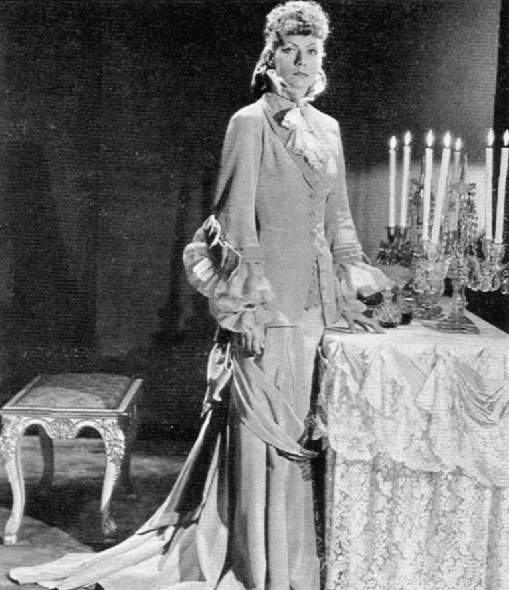
She kept having moments of doubt whether the carriage was moving forwards or backwards, or standing still. Was that Annushka beside her, or some stranger? ‘What is that on the armrest – a fur coat or some animal? And what am I? Myself or someone else?'
-Anna Karenina

Photo: Greta Garbo in the movie version, 1939

Wednesday, May 4, 2011

This Should Happen: Acting Awards for FNL's Vince

Michael B. Jordan, who plays star quarterback Vince on Friday Night Lights, deserves an Emmy/Golden Globe/Screen Actors Guild Award for his performance. Here's his Oscar-bait-money-clip from last week's episode, wherein he doesn't even talk until two minutes in and still manages to steal the scene:


He's just as good in the lighter moments, but I can't find a decent clip.